Sign In
Notification
Font ResizerAa
  • Latest
    • Supreme Court
    • Madras High Court
    • Madurai Bench
  • Quick Recall
    • Arms Act
    • BNSS
    • BNS
    • BSA
    • Evidence
    • Drugs Act
    • Cr.P.C
    • IPC
    • N.I.Act
    • PMLA
    • NDPS
    • Corruption Laws
    • General
    • Passports Act
    • Pocso
    • MCOP
    • Writ
  • Acquittal
    • S.C
    • Madras High Court
  • 3 judge bench
  • Resources
    • Notes
      • Cr.P.C 1973
      • Crimes
    • Articles
      • P.G.Rajagopal (Judge Rtd)
      • Ad. Ramprakash Rajagopal
      • Ad. Karunanithi
      • Ad. Ravindran Raghunathan
      • Ad. James Raja
      • Ad. M.S.Parthiban
      • Ad. Rajavel
      • Ad. Azhar Basha
    • Digest
      • Monthly Digest
      • Weekly digest
      • Subject wise
    • Bare Acts
      • BSA 2023
      • BNS 2023
      • BNSS 2023
  • Must Read
  • Author’s note
  • E-Booklet
    • Legal words
  • About
    • Terms
    • Privacy policy
    • Cancellation & Refund Policy
    • Team
  • Civil
    • s. 91 cpc
  • My Bookmarks
Reading: Further Investigation: Magistrate can direct further investigation under section156(3) Cr.P.C till framing of charges
Share
Font ResizerAa
  • Latest
  • Acquittal
  • Digest
  • Resources
Search
  • Latest
    • Madras High Court
    • Madurai Bench
    • Supreme Court
  • Quick Recall
    • Evidence
    • Cr.P.C
    • IPC
    • N.I.Act
    • Pocso
    • PMLA
    • NDPS
    • Corruption Laws
    • General
    • Passports Act
  • Acquittal
    • S.C
    • Madras High Court
  • Digest
    • Monthly Digest
    • Weekly digest
  • Resources
    • Notes
    • Articles
  • 3 judge bench
  • Must have
  • Author’S Note
  • E-Booklet
  • Legal words
  • About
    • Terms
    • Privacy policy
    • Cancellation & Refund Policy
    • Team
  • Mobile APP
  • My Bookmarks

Get Notifications

Notification
Follow US
> Quick Recall> Cr.P.C> Further Investigation: Magistrate can direct further investigation under section156(3) Cr.P.C till framing of charges

Further Investigation: Magistrate can direct further investigation under section156(3) Cr.P.C till framing of charges

This text discusses the power of Magistrates to order further investigation in criminal cases until charges are framed, emphasizing the importance of fair and just investigations.
Ramprakash Rajagopal January 30, 2023 8 Min Read
Share
Further investigation
Points
Previous Supreme Court judgments that restricted the power to direct further investigation u/s 156 (3) Cr.P.C till framing of charges are overruledHon’ble Supreme court set aside the High court judgment denuded the power of further investigation post cognizancePartyFurther study

Points

Toggle
    • Previous Supreme Court judgments that restricted the power to direct further investigation u/s 156 (3) Cr.P.C till framing of charges are overruled
    • Hon’ble Supreme court set aside the High court judgment denuded the power of further investigation post cognizance
    • Party
    • Further study
  • Subject Study
Previous Supreme Court judgments that restricted the power to direct further investigation u/s 156 (3) Cr.P.C till framing of charges are overruled

38. There is no good reason given by the Court in these decisions as to why a Magistrate’s powers to order further investigation would suddenly cease upon process being issued, and an accused appearing before the Magistrate, while concomitantly, the power of the police to further investigate the offence continues right till the stage the trial commences. Such a view would not accord with the earlier judgments of this Court, in particular, Sakiri (supra), Samaj Parivartan Samudaya (supra), Vinay Tyagi (supra), and Hardeep Singh (supra); Hardeep Singh (supra) having clearly held that a criminal trial does not begin after cognizance is taken, but only after charges are framed. What is not given any importance at all in the recent judgments of this Court is Article 21 of the Constitution and the fact that the Article demands no less than a fair and just investigation. To say that a fair and just investigation would lead to the conclusion that the police retain the power, subject, of course, to the Magistrate’s nod under Section 173(8) to further investigate an offence till charges are framed, but that the supervisory jurisdiction of the Magistrate suddenly ceases midway through the pre-trial proceedings, would amount to a travesty of justice, as certain cases may cry out for further investigation so that an innocent person is not wrongly arraigned as an accused or that a prima facie guilty person is not so left out. There is no warrant for such a narrow and restrictive view of the powers of the Magistrate, particularly when such powers are traceable to Section 156(3) read with Section 156(1), Section 2(h), and Section 173(8) of the CrPC, as has been noticed hereinabove, and would be available at all stages of the progress of a criminal case before the trial actually commences. It would also be in the interest of justice that this power be exercised suo motu by the Magistrate himself, depending on the facts of each case. Whether further investigation should or should not be ordered is within the discretion of the learned Magistrate who will exercise such discretion on the facts of each case and in accordance with law. If, for example, fresh facts come to light which would lead to inculpating or exculpating certain persons, arriving at the truth and doing substantial justice in a criminal case are more important than avoiding further delay being caused in concluding the criminal proceeding, as was held in Hasanbhai Valibhai Qureshi (supra). Therefore, to the extent that the judgments in Amrutbhai Shambubhai Patel (supra), Athul Rao (supra) and Bikash Ranjan Rout (supra) have held to the contrary, they stand overruled. Needless to add, Randhir Singh Rana v. State (Delhi Administration) (1997) 1 SCC 361 60 and Reeta Nag v. State of West Bengal and Ors. (2009) 9 SCC 129 also stand overruled.

39. We now come to certain other judgments that were cited before us. King Emperor v. Khwaja Nazir Ahmad AIR 1945 PC 18, was strongly relied upon by Shri Basant for the proposition that unlike superior Courts, Magistrates did not possess any inherent power under the CrPC. Since we have grounded the power of the Magistrate to order further investigation until charges are framed under Section 156(3) read with Section 173(8) of the CrPC, no question as to a Magistrate exercising any inherent power under the CrPC would arise in this case.

Union of India and Anr. v. W.N Chadha (1993) Supp. 4 SCC 260, is a judgment which states that the accused has no right to participate in the investigation till process is issued to him, provided there is strict compliance of the requirements of fair investigation Likewise, the judgments in Smt. Nagawwa v. Veeranna Shivalongappa Konjalgi & Ors. (1976) 3 SCC 736, Prabha Mathur and Anr. v. Pramod Aggarwal & Ors., (2008) 9 SCC 469, Narender G. Goel v. State of Maharashtra (2009) 6 SCC 65 and Dinubhai Bhogabhai Solanki v. State of Gujarat 61 & Ors. (2014) 4 SCC 626, which state that the accused has no right to be heard at the stage of investigation, has very little to do with the precise question before us. All these judgments are, therefore, distinguishable. Further, Babubhai v. State of Gujarat & Ors. (2010) 12 SCC 254, is a judgment which distinguishes between further investigation and re-investigation, and holds that a superior court may, in order to prevent miscarriage of criminal justice if it considers necessary, direct investigation de novo, whereas a Magistrate’s power is limited to ordering further investigation. Since the present case is not concerned with re-investigation, this judgment also cannot take us much further. Likewise, Romila Thapar v. Union of India, (2018) 10 SCC 753, held that an accused cannot ask to change an investigating agency, or to require that an investigation be done in a particular manner, including asking for a court[1]monitored investigation. This judgment also is far removed from the question that has been decided by us in the facts of this case.

Hon’ble Supreme court set aside the High court judgment denuded the power of further investigation post cognizance

We, therefore, set aside the impugned High Court judgment insofar as it states that post-cognizance the Magistrate is denuded of power to order further investigation. However, given that the facts stated in the application for further investigation have no direct bearing on the investigation conducted pursuant to the FIR dated 22.12.2009, we uphold the impugned High Court judgment insofar as it has set aside the judgment of the Second Additional Sessions Judge dated 10.01.2012 which had ordered further investigation, and also the consequential order setting aside the two additional interim reports of the IO Munshi. So far as Criminal Revision Application No.346 of 2011 is concerned, we set aside the impugned High Court judgment which remanded the matter to the revisional court. Consequently, the judgment of the learned Additional 65 Sessions Judge dated 23.04.2016 upon remand is also set aside, rendering Special Criminal Application No.3085 of 2016 infructuous.

Party

Vinubhai Haribhai Malaviya and Ors. … Appellants Versus The State of Gujarat and Anr. …Respondents – CRIMINAL APPEAL NOS.478-479 OF 2017 – October 16, 2019.

https://webapi.sci.gov.in/supremecourt/2013/35581/35581_2013_5_1501_17480_Judgement_16-Oct-2019.pdf

Vinubhai Haribhai Malaviya and ors vs. The State of Gujarat

Further study
  • POLICE SUMMONS – POLICE MAY SUMMON PARTIES DURING PRELIMINARY INQUIRY
  • WHETHER PROTEST PETITION IS “COMPLAINT”?
  • DEATH PENALTY IS REDUCED TO 30 YEARS – ENTIRE EVIDENCE ACT DISCUSSED
  • POWERS OF MAGISTRATE U/S 156(3) DIRECTION

Subject Study

  • Cheating: Breach of contract is not the only remedy for contract allegations section 420 IPC also attracted
  • HOSTILE WITNESS – A DETAILED STUDY…
  • If the accused is admonished by the court then the court cannot impose compensation too
  • Cost: Hon’ble Supreme court imposed cost on the husband to file cheating case on his wife
  • NDPS Act: Seized substance in the presence of gazetted officer not certified by the magistrate has no evidentiary value
  • Section 308 IPC modified into section 338 IPC
  • Discharge: Discharge application cannot be filed after the trial starts
  • Section145 Evidence Act – How not to contradict a wintess?

Further Study

Section197 Cr.P.C: Sanction is required only to take cognizance by courts and not to file final reports

Section 154 Cr.P.C: Police has no other option except to register fir if cognizable offence found and magistrate must direct investigation if cognizable offence found in the complaint

Acquittal: Though circumstantial evidence casts doubt on the homicide committed by the accused but the same is inconclusive without any corroborative evidence and based on mere last seen together

Disposal of criminal cases more than 3 years involving offences punishable with imprisonment of upto 3 years pending at trial appeal or revision stage

Section 294b IPC: Absence of words involve arousing sexual thoughts or feelings or words cannot attract offence

TAGGED:further investigationmust havemust have judgmentsection156(3)till framing of chargesvinubhai haribhai malaviya
Previous Article Dowry death: Presumption
Next Article section 277 Section 277 Cr.P.C: Recording of witnesses has to be in their own language only
1 Comment
  • Pingback: The Significance of Section 301 CrPC in Criminal Trials - section1.in

Leave a Reply Cancel reply

Your email address will not be published. Required fields are marked *

Popular Study

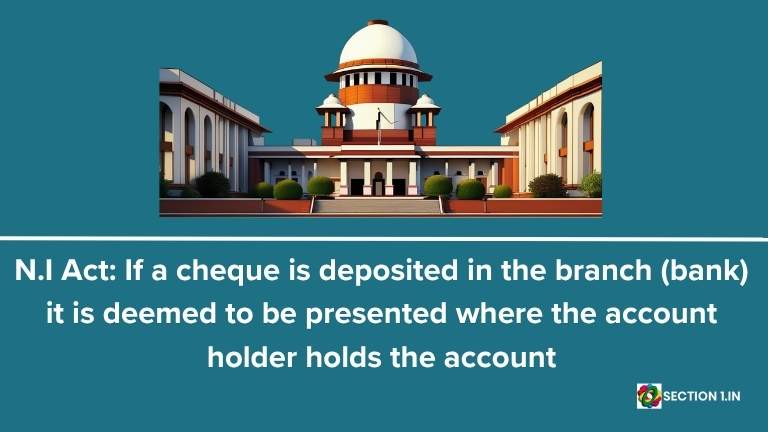
N.I Act: If a cheque is deposited in the branch (bank) it is deemed to be presented where the account holder holds the account

Ramprakash Rajagopal July 29, 2025
Accused is armed and the deceased is unarmed hence exception 2 (private defence) to section 300 IPC not applicable
Even on a (private) complaint the Magistrate before taking cognizance is empowered to forward the complaint for investigation under section 156(3) Cr.P.C
Acquittal: Animosity between the parties is not sufficient to prove the crime either direct or circumstantial
The Tamil Nadu Rent Act, 2017 Needs Constitutional Correction

Related Study

Hon’ble Madras High Court issued guidelines to Family courts to cirumvent the procedural wrangles that are being faced by the parties before the Family court
April 4, 2025
Released of accused on probation after his appeal was decided by high court after 37 years
May 11, 2023
Quash: NI Act: If the notice amount is different from the cheque amount then cheque proceedings are bad in law and the defence of typographical error is irrelevant
September 20, 2025
Police has the bounden duty to register fir once direction received under section 156(3) Cr.P.C
October 28, 2023
POCSO: Acquittal: Less IQ for the victim
January 22, 2023
In cross-cases the Investigation Officer has to file both the final reports before the jurisdictional court
April 24, 2023
Cognizance: To take cognizance under section 186 IPC procedure under section 195(1)(a)(i) of the Cr.P.C shall be followed
August 30, 2024
Acquittal: Appreciation of evidence
January 7, 2024
Murder caes: Acquittal: One witness did not mentioned other witnesses at the SOC
October 20, 2025
Section 139 N.I Act: Rebuttable presumption: Explained
January 19, 2023

About

Section1.in is all about the legal updates in Criminal and Corporate Laws. This website also gives opportunity to publish your (readers/users) articles subject to the condition of being edited (only if necessary) by the team of Advocates. Kindly send your articles to paperpageindia@gmail.com or WhatsApp to +919361570190.
  • Quick Links
  • Team
  • Terms
  • Cancellation Policy
  • Privacy Policy
  • My Bookmarks
  • Founder

section1.in is powered by Paperpage.             A product of © Paperpage Internet Services. All Rights Reserved. 

Subscribe Newsletter for free

Subscribe to our newsletter to get judgments instantly!

Check your inbox or spam folder to confirm your subscription.

ஓர்ந்துகண் ணோடாது இறைபுரிந்து யார்மாட்டும் தேர்ந்துசெய் வஃதே முறை [541].

_திருவள்ளுவர்
Welcome Back!

Sign in to your account

Username or Email Address
Password

Lost your password?